Listen
Gather employee and supervisor perspectives.
Portfolio case study · Workforce strategy
Using job analysis, stakeholder input, and comparative evidence to clarify role expectations, identify meaningful variation, and support confident workforce decisions.
The consulting approach
The analysis began with discovery—understanding stakeholder experiences, operating context, and how responsibilities connected across the organization.
Employee questionnaires, supervisor perspectives, job descriptions, systems exposure, and operating context were analyzed together. This made it possible to separate a role’s essential purpose from the additional responsibilities created by a particular environment.
Gather employee and supervisor perspectives.
Translate varied job descriptions into consistent functional categories.
Examine frequency, scope, systems, context, and decision authority.
Involve impacted employees and supervisors in validating responsibilities, context, and emerging patterns.
Test emerging interpretations with leaders and identify outliers.
Present what the evidence supports, what it does not, and what needs further review.
Contribution and outcomes
The work extended beyond analyzing job descriptions. It connected project design, stakeholder participation, evidence synthesis, and executive communication.
I designed and led the review process, coordinated employee and supervisor input, analyzed responsibility patterns and decision authority, compared roles across operating contexts, and translated the findings into recommendations for executive consideration.
The analysis gave leaders a defensible basis for maintaining the broader role structure, identifying a limited number of positions for further review, and distinguishing meaningful scope differences from normal operating variation.
It also created a repeatable approach for future role, classification, and workforce-alignment reviews.
Selected portfolio artifacts
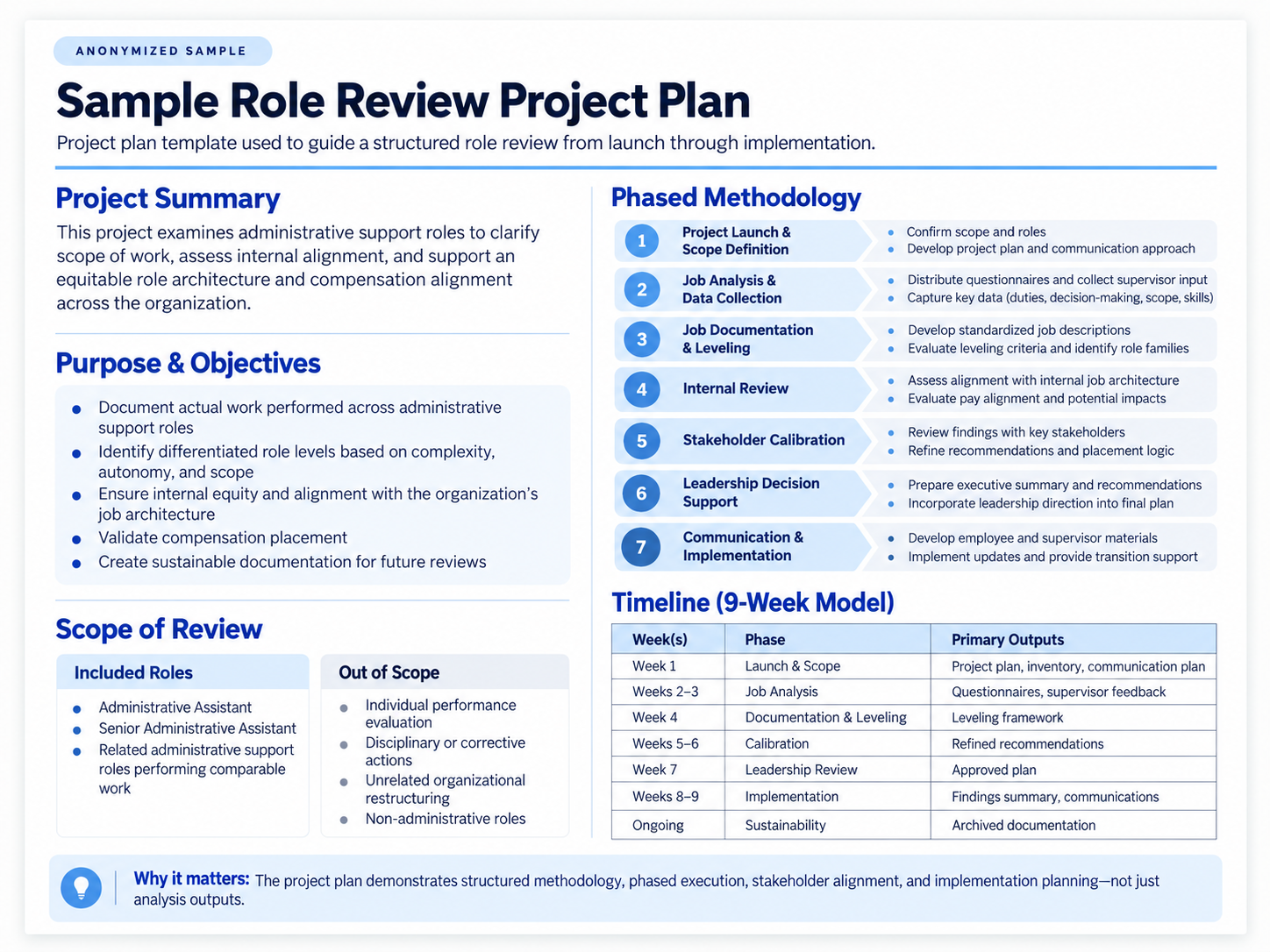
A phased methodology that guides the review from discovery through decision support.
View full size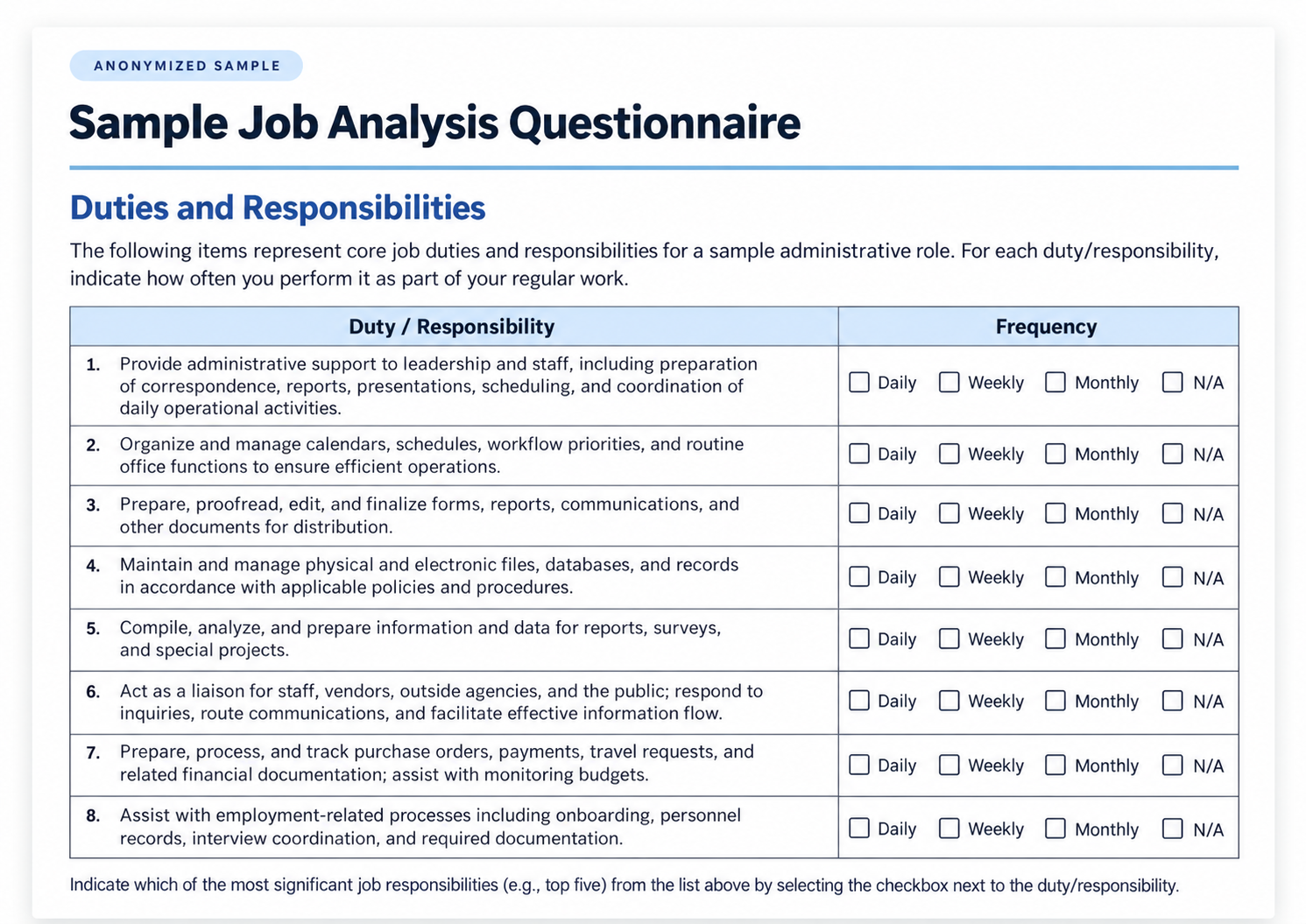
Structured input on duties, frequency, scope, qualifications, KSAs, and decision authority.
View full size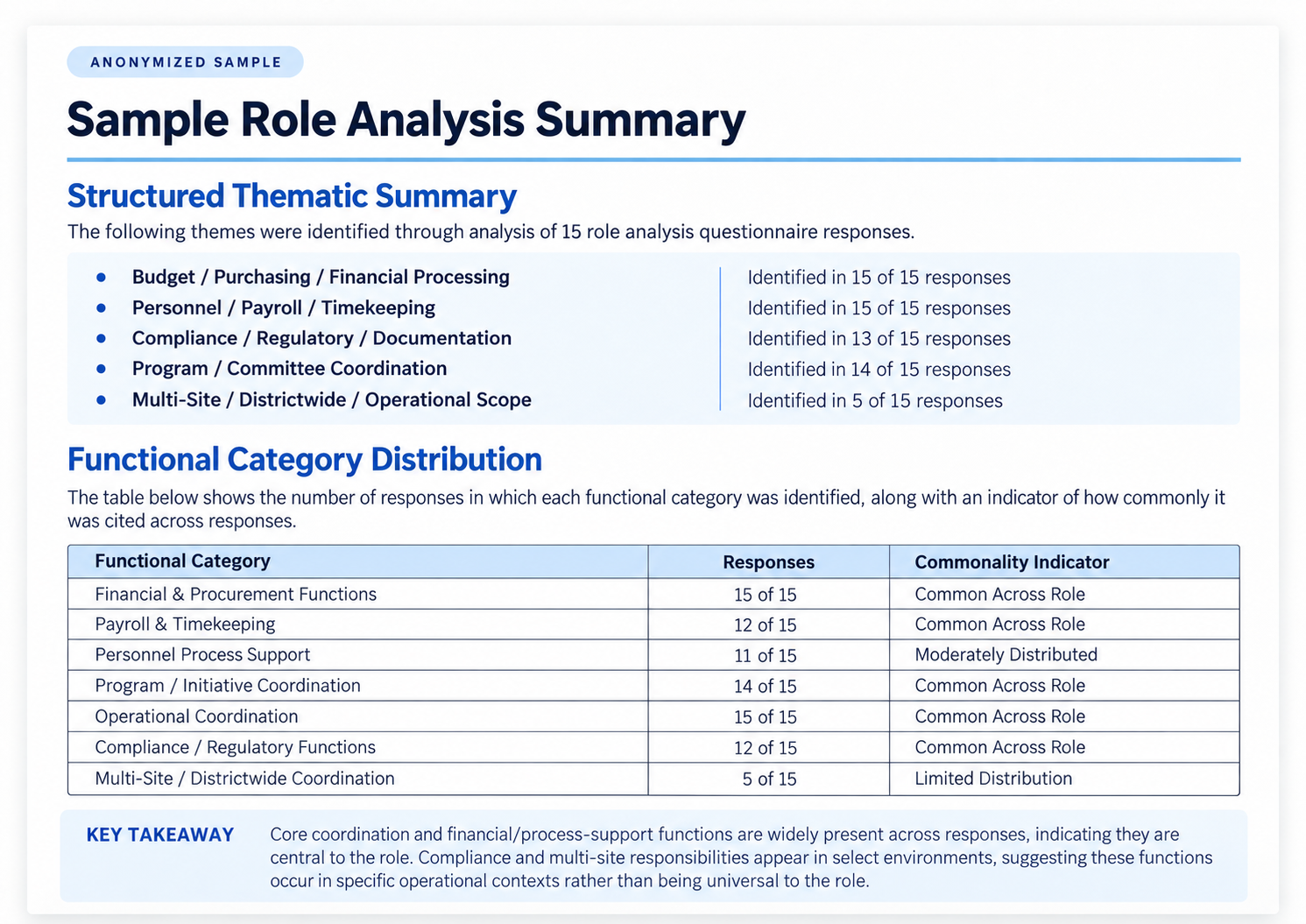
Responses synthesized into functional patterns, commonality indicators, and scope distinctions.
View full size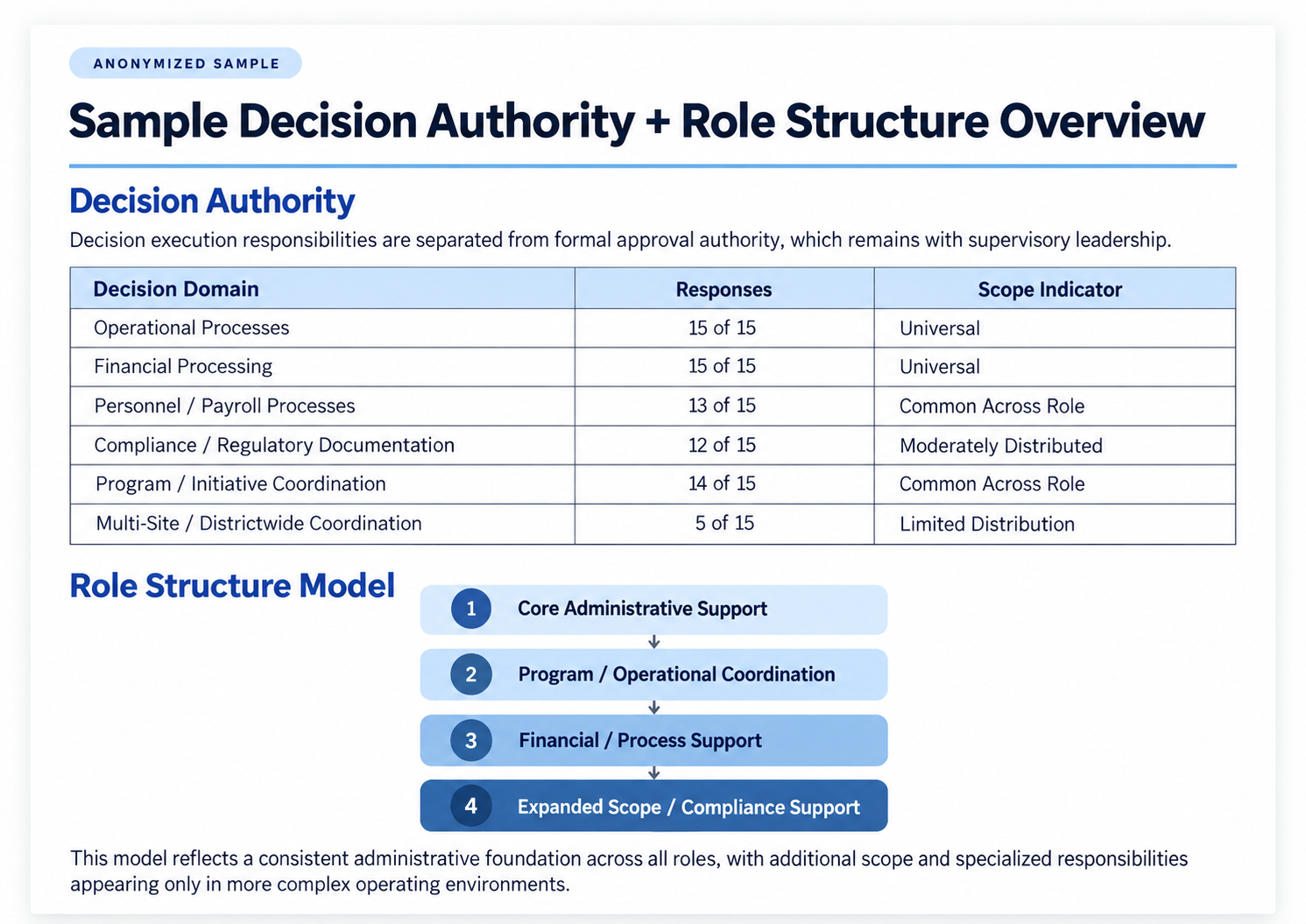
Evidence translated into decision logic and a model of shared roles and differentiated scope.
View full sizeExplore the evidence
Select a view to see how the evidence was examined at different levels.
Evidence base
The review combined structured questionnaires, open-ended responses, supervisor validation, job-description analysis, and cross-group comparison to distinguish shared role expectations from context-specific scope.
Figures are aggregated and organizational identifiers have been removed. Detailed source reports remain confidential.
What the analysis revealed
Coordination, communication, workflow management, documentation, and financial-process support formed a recognizable core.
Operational infrastructure, program complexity, regulatory exposure, and organization-wide scope created legitimate variation.
Employees carried substantial responsibility for processes while final approval remained with leadership.
From evidence to decision
The evidence supported maintaining the broader role structure while using targeted follow-up for positions with genuinely concentrated scope.
These are questions the data raises—not conclusions.
Stakeholder and change strategy
Role reviews can quickly feel personal. Impacted employees and supervisors were involved through questionnaires, validation, and follow-up conversations. Communication clarified that the work examined positions—not employee performance—and that stakeholder perspectives were essential evidence.
Value to the organization
A clearer view of shared expectations and legitimate variation.
Leadership conclusions grounded in multiple evidence sources.
Targeted action instead of unnecessary organization-wide change.
A repeatable method for future workforce and role reviews.